What to look for while purchasing luxury goods online
August 13, 2026
·
4 min read
·
By Casa Mayuka
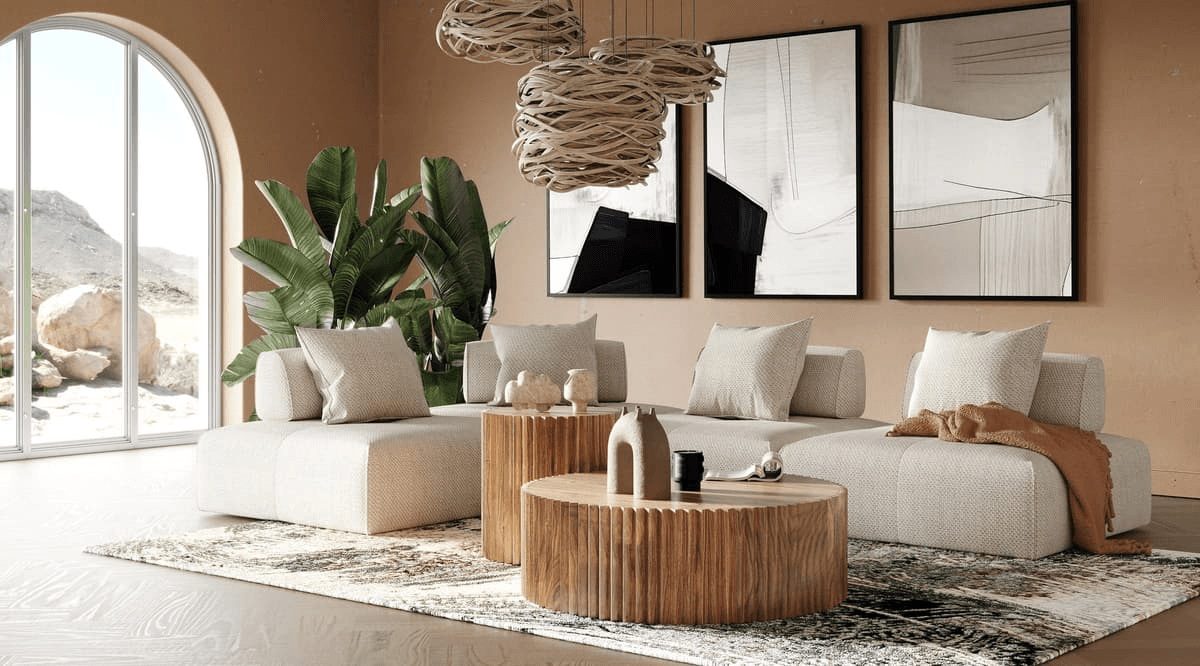
A photograph can only tell you so much. It will show you a chair's silhouette and its colour, but not the weight of it, not how the arm meets the seat, not whether the top was cut from one board or four. Buying considered furniture online means closing that gap with questions instead of hands, and the answers are usually already on the page, if you know which ones to look for.
Read the materials, not the adjectives
Luxury, premium and artisanal are not specifications. Material names are. There is a real difference between solid oak, an oak veneer over an engineered core, and an oak-coloured finish over something else entirely. Only the first of those can be sanded back and refinished a decade from now.
None of these is a flaw in itself. Veneer is the correct choice for a wide, flat surface that would otherwise cup and split, and every good cabinetmaker uses it. What matters is whether the seller names it plainly. A listing that reads "engineered core, 0.6 mm white oak veneer, solid oak edge" is telling you it has nothing to hide. A listing that reads "premium wood" is telling you something too.
Trust the unglamorous photographs
Anyone can commission a beautiful hero shot. Far fewer sellers will photograph the underside of a table, the back of a cabinet, the inside of a drawer, or the join where two pieces of timber meet. Those are the images that carry information:
- Joinery: are the corners cut and fitted, or butted together and screwed?
- The back panel: finished in the same material, or a thin sheet stapled on?
- Drawer interiors: how they run, and what stops them.
- Edges and undersides, where a rushed finish always shows first.
If those photographs exist, look closely. If they do not, ask for them. A workshop that is proud of its making will send them.
Measure the room, then measure the route
Most furniture that goes back was not disliked. It simply did not fit, and more often than not it was the doorway rather than the room that defeated it. Before committing to anything large:
- Mark the footprint on the floor with tape and live around it for a day.
- Measure the narrowest point of the delivery route: the entrance, the turn in the stairwell, the lift car, the corridor outside your door.
- Check the diagonal. A sofa that will not pass through a door flat will often pass through it tilted, and the seller can usually tell you whether the legs come off.
For seating, the numbers that decide comfort are seat height, seat depth and back angle, not overall dimensions. Compare them against a chair you already own and like.
Ask who made it, and how many they made
Small-batch work behaves differently from mass production, and that is the point of it. Grain varies between pieces. Two chairs from the same workshop may take a stain slightly differently. A hand-applied finish shows the maker's hand under raking light.
Knowing this before delivery is what lets variation read as evidence of the making rather than as a defect. Ask what is not meant to vary, too: dimensions, hardware and structural detail should be consistent piece to piece.
Read the terms that apply to your specific piece
On a marketplace the seller sets the terms of sale, not the platform, so they can differ from one product to the next. Made-to-order and personalised pieces are almost always treated differently from stocked ones. Before checking out, find these four answers on the listing itself:
- Is this in stock or made to order, and what is the lead time?
- What happens if it arrives damaged, and who arranges the collection?
- Does a change of mind qualify for a return, and who pays the shipping if it does?
- Who is responsible for the piece after delivery, and how do you reach them?
None of these are difficult questions. A seller who answers them plainly on the page has thought about what happens after the sale, which is the part that matters most and is discussed least.
Buy for the second decade
Solid wood moves with the seasons. Leather darkens where you sit. Brass loses its lacquer and goes soft and warm. These are not failures. They are the reason people choose these materials in the first place. The useful question is whether a piece is built to be maintained: whether the finish can be repaired, whether the hardware can be replaced, whether anyone will still be there to ask.
The best test of something bought online is not whether it photographs well on the day it arrives, but whether in fifteen years you would rather repair it than replace it.
Ask for the care instructions before you buy rather than after. They tell you what the object will need from you, and a seller's willingness to be specific about it is as good a signal of quality as anything in the photographs.